
scRNAseq approaches have revolutionized the way biologists approach their research subjects, by making it possible to dissect molecular mechanisms at the single-cell level. But although technological developments have recently made these approaches more accessible, their expensive use still requires significant technical training, including the good conception of experimental designs, the preparation of samples as well as their bioinformatics analyses. In addition, different protocols and various bioinformatics and statistical analyzes are available, and it can be difficult to choose the most relevant ones for the biological question at hand.
Over five days, the SPS Summer School 2026 will cover all the stages of a scRNAseq project in plants. Through a combination of lectures and practical work, the many specific features of plant models will be highlighted by experts from the Saclay Plant Sciences network (CNRS and INRAE), the ViB in Ghent and the Pasteur Institute.
After this international school, participants will :
- Have an overview of the different scRNAseq technologies and understand their pros and cons
– Be able to design experiments depending on the biological question
– Be trained on sample preparation techniques for single cell and single nuclei
– Understand the different steps of bioinformatics and statistical analysis
– Have a better biological interpretation of results
– Have facilitated exchanges with technology platforms, bioinformaticians, as well as biostatisticians in order to successfully complete their scRNAseq project
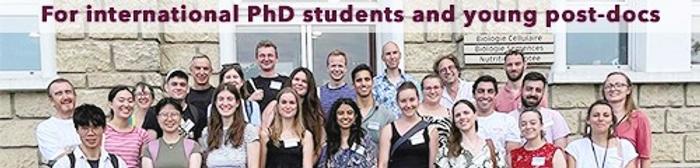
The summer school will bring together outstanding and enthusiastic young scientists (PhD students and post-docs) from all over the world in order to exchange knowledge and ideas. It is limited to a small group of participants (20 maximum) to privilege informal interactions and scientific discussions.
This intensive and varied one-week program will allow many opportunities to discuss with speakers and fellow participants.
Deadline for application: March 12, 2026 (midnight)
More information and how to apply can be found here
Related events


Free
External