
Outreach, Education and Diversity
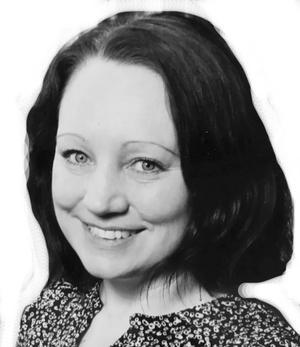
OED Trustee: Prof Sheila Amici-Dargan (University of Bristol)
Are you looking to get more engaged with the SEB? Want to gain valuable experience in outreach, education or diversity initiatives? Have ideas on how to improve the SEB's offering in these areas? Then join our OED special interest group to promote wider discussions on how we can support/enhance outreach, education and diversity within the Society and beyond.
Who can join?
We invite any SEB member who is interested in taking a more active role. The group focuses on:
1. Outreach - public engagement with experimental biology and encouraging the next generation of scientists
2. Education - innovative and inclusive bioscience education and pedagogical methods
3. Diversity - promoting an inclusive environment at the SEB and improving diversity in science and academia more widely
What do I have to do?
Your initial commitment will be to attend four one-hour online discussions per year to input your own ideas on our existing OED activities and resources for members (and non-members) and how we could increase our impact. Any focus group members who want to be more actively involved will have the opportunity to co-organise/host activities and/or co-create resources.
Use the button below to log in to the members' area and join a group.
Education Convenor
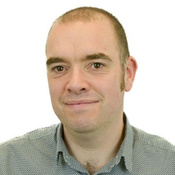
Peter Moult
Dr Peter Moult was appointed lecturer (Learning & Teaching) in Neuroscience at the University of Glasgow in 2018 and now leads year 3 of the Undergraduate Neuroscience degree.
Peter graduated with a BSc(Hons) in Pharmacology from the University of Aberdeen, before going on to complete an MRC funded PhD in Cellular Neuroscience at the MRC Centre for Synaptic Plasticity at the University of Bristol. Originally remaining in Bristol as a postdoctoral research assistant, Peter then moved on as a postdoctoral research assistant and research fellow to the University of Dundee & University of St. Andrew’s respectively.
Peter was awarded his first learning & teaching focussed lectureship in Biomedical Sciences at Abertay University in 2013 before moving to his current role at the University of Glasgow as a Lecturer in Neuroscience in 2018.
Whilst originally training and working in cellular neuroscience across several universities he has developed a keen interest in the scholarship of teaching and learning, particularly pertaining to collaborative curriculum design with practical skills applications within the life sciences.
Peter is a keen advocate of widening participation, leading the Life Sciences college articulation program for the university of Glasgow which facilitates a direct entry route for college students into level two the life science programs.
Peter has taught and led a variety of Life Sciences courses over the years both in Glasgow & Dundee with a wide range of experience in course leadership, external examining and QA work.
Why I would like the role and what I plan to achieve
I am passionate about supporting educators at all stages of their careers, with a particular focus on those new to teaching roles. I believe strongly in embedding colleagues within a supportive community where best practice can be shared and the scholarship of teaching and learning can be actively advanced.
I bring extensive experience in securing external funding, reviewing grants, and managing projects—having successfully supervised three PhD students to completion while holding teaching-focused lectureships. I also serve on the reviewing committee for Glasgow’s annual Learning and Teaching Conference. This background equips me to contribute to strengthening SEB’s community of practice by enhancing support for grant writing, peer review, and project management. Whilst we all deliver excellent teaching, I believe our strong community can be enhanced further by helping colleagues secure more of the limited external funding needed to develop innovative SoTL projects that can further inform and enrich our teaching practices.
Outreach Convenor
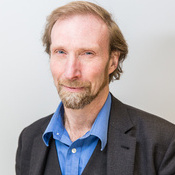
Stuart Thompson
I did my doctoral research on abscission with Daphne Osborne in Oxford and then went to Lancaster to work on crop ecophysiology with Bill Davis, but since 2000 I have been a plant science lecturer at Westminster in a department mostly focussed on human health and biomedicine. As a result, I have become a “Jack of Trades” in my teaching, lecturing on subjects including (but not limited to) abiogenesis, exobiology, climate change, and quantum biology, as well as things closer to home such as food security (and pretty much anything we teach that involves plants). I also lead modules on bioethics and scientific history and philosophy. I therefore feel that I can bring curiosity and enthusiasm (and at least a little knowledge), about a very wide range of aspects of biology and science, and the intersection of science and society. I have also written several popular science articles for The Conversation, a number of which have been republished by the iPaper. I think that these articles have shown that I understand how to make science interesting and accessible for lay audiences.
Science and technology have probably been the most important drivers of change in society since at least the start of the twentieth century. However, the public’s understanding of science and, at least as importantly, how to make reasoned judgements about scientific claims has lagged behind. The consequences of this are having wide impacts on key issues such as vaccine uptake, living healthily, or behaviours to mitigate climate change. It is therefore critical that we make scientific knowledge, the process by which it is created, and what it means, widely available and transparent. What I would hope to achieve is to help make SEB members (and colleagues outside the Society) more visible, communicating what they know, why they are confident that this is the best interpretation of the available information, and in some cases what reasonable ethical or policy choices this might lead to.
Diversity Convenor
Still open for applications
We are still looking for an enthusiastic volunteer to step into the role of Diversity Convener. This is a unique opportunity to take a leading position within an international learned society and make a meaningful impact on inclusion and equity in experimental biology.
The Diversity Convener will:
- Promote and support the judging of SEB’s Diversity Grant
- Identify opportunities to improve inclusion and accessibility across SEB’s activities and resources
- Work with members and sections to improve representation within the Society
- Suggest and lead new initiatives that promote diversity and inclusion in the biosciences
This role offers excellent professional development and leadership experience that can strengthen your CV, support applications for professorship or promotion, and help shape the culture of the SEB community.
If you are passionate about making the biosciences a safe, welcoming, and inclusive place for everyone, we would love to hear from you. To apply for the Diversity Convener role, please send the following to [email protected] by the 3rd October 2025:
- Two short paragraphs:
- Your biography/background
- Why you would like the role and what you plan to achieve
- A photo (optional)
We will publish these on the SEB website and open them to a member vote.