
Invited Speakers

Dr Alisha Aman

Dr Christine Bell

Dr Oana Birceanu

Dr Denise Hough

Rose Stephenson

Dr Skye Zhao
Event Organisers

Dr Sarah Rayment

Dr Peter R Moult

Dr Colin McClure

Jordon Millward

Prof. Sheila Amici-Dargan

Dr Alisha Aman is a Teaching Fellow at the MVLS Graduate School, where she leads the development of the MSc in MedTech Innovation. This cross-college, multidisciplinary programme brings together academia, NHS Innovation Hubs, industry, and government to train the next generation of healthcare innovators. She has also co-led the curriculum design for the MSc in Clinical Trials, working in partnership with NHS Greater Glasgow and Clyde and IQVIA. Alongside her teaching and programme leadership, Alisha represents the University on the Royal Society of Biology’s Early Career Lecturers in Biosciences (ECLBio) committee and has a strong interest in how emerging technologies can enhance higher education.
At this event, Alisha will deliver an interactive workshop exploring practical and responsible uses of generative AI in teaching and learning. Building on her work with the MVLS GAINEd steering group, the session will demonstrate hands-on examples of how tools such as Copilot can be used to improve accessibility and inclusivity in teaching, including reviewing presentation materials and supporting assessment design. The workshop will also showcase ways in which generative AI can enhance efficiency in academic workflows, freeing up time for teaching and student support. In its final section, the workshop will focus on how educators can embed and embrace generative AI more sustainably within higher education, encouraging thoughtful use that considers environmental impact and the scale at which we teach.
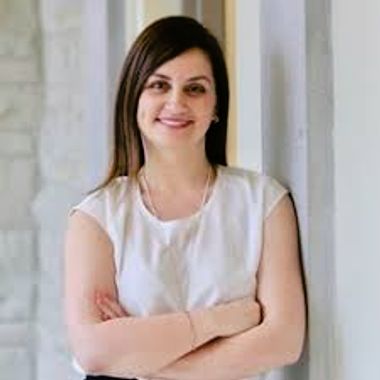
Dr Christine E. Bell is a faculty member in the Department of Physiology and Pharmacology at Western University, Canada. Her research centres on feedback literacy, with a particular focus on how students interpret and use feedback, and how this influences learning, stress, and academic agency. She also explores the role of generative AI in teaching and learning, ethical practice within the Scholarship of Teaching and Learning in Canada, and strategies for embedding the UN Sustainable Development Goals into physiology education.
Christine teaches across undergraduate physiology and pharmacology programmes, as well as in medicine and dentistry. Her teaching is grounded in active learning and case-based approaches, supporting students to connect biomedical science with real-world and professional challenges.
At this event, Christine will co-deliver a workshop with Oana Birceanu that focuses on developing students’ generative AI literacy within lab-based learning environments. The session will explore practical approaches to supporting GenAI literacy, context engineering, and critical evaluation skills — all increasingly important competencies for scientific and research careers. Participants will take part in a hands-on activity demonstrating how structured use of generative AI can support experimental design and data analysis. The workshop will also discuss adaptable strategies for embedding GenAI into inquiry-driven teaching, helping students build analytical, communication, and digital skills that are essential for future work settings.

I am an Assistant Professor in the Department of Physiology and Pharmacology at Western University in London, Ontario, Canada. I am a comparative physiologist and toxicologist, with a focus in understanding how stressors impact organisms long-term and across generations. My research group explores questions from the level of the genes to whole organisms, using both vertebrate (zebrafish, sea lampreys) and invertebrate (daphnids and planaria) model organisms. In addition to my wet lab research, I have recently taken an interest in using evidence-based approaches to my teaching, drawing from research conducted in the fields of human cognition and the scholarship of teaching and learning, specifically focusing on how educators can support adult learners retain information. As a leader both in a research laboratory and a large (250+ students) teaching laboratory, I am interested in how I can support undergraduate students integrate information across multiple courses and successfully apply it as part of a research project.
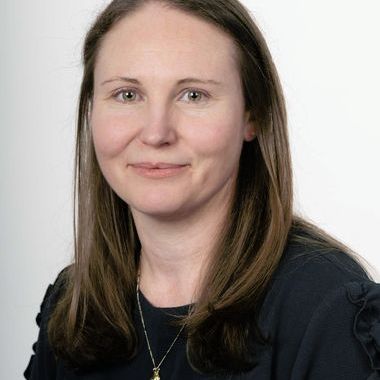
Dr Denise Hough is a Lecturer in Biology on the Learning, Teaching and Scholarship track at the University of Glasgow. She coordinates and teaches across undergraduate programmes in animal biology, veterinary biosciences, and veterinary medicine, with a strong emphasis on student-centred learning and authentic assessment. Denise has led both institutional and sector-wide initiatives on the responsible use of generative AI in education, including establishing the MVLS Generative AI Network for Education (GAINEd) and contributing to international Massive Open Online Courses.
Alongside her pedagogical scholarship, Denise supervises student research projects in endocrinology and animal welfare and is actively involved in public engagement and widening participation.
In her talk, Denise will share insights from the Generative AI Network for Education (GAINEd), focusing on the importance of Context, Control, and Critical use when embedding generative AI in higher education. She will highlight practical examples and resources that support sustainable, skills-focused approaches to GenAI use for both staff and students.
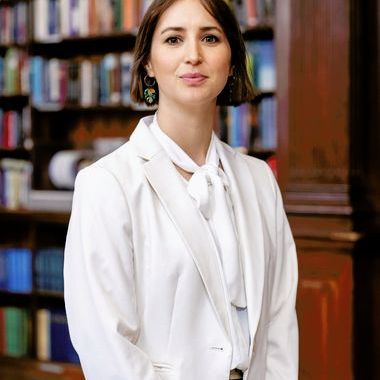
Rose leads a high-profile programme of research, analysis and public engagement, shaping national debate on higher education and equality. Her work focuses on strengthening the links between evidence, policymaking and practice. Rose also leads HEPI’s strategic direction, setting priorities that position the institute at the centre of national debate on higher education.
Rose works closely with policymakers, regulators, and sector leaders, and has particular expertise in the evolving student experience, lifelong learning, the impact of AI on higher education, and issues of social mobility and equality . She is known for her ability to translate complex evidence into clear, practical policy insight and for building constructive dialogue across government, institutions and the wider public.
Before joining HEPI, Rose held a series of transformational roles at the University of Bath, spanning student experience, policy development and programme delivery. She brings a strong understanding of how national policy decisions are implemented on the ground, and is a regular media commentator, speaker and chair on higher education reform.

Dr Skye Xin Zhao is an Assistant Professor at the Manchester Institute of Education, University of Manchester. She holds an AI Fellow at the Institute of Teaching and Learning at the same university and a Senior Fellow at the Microsoft AI Economy Institute.
Her work spans academic research and consultancy across higher education, the private education sector, and government organisations. She is a partner in UNESCO’s global initiative reviewing the adoption of AI competency frameworks across higher education institutions. In addition, Dr Zhao serves on the United Nations expert panel on Generative AI.
Dr Zhao’s primary research focuses on the use of digital technologies in education, with a particular emphasis on GenAI. She investigates institutional responses to GenAI and explores the perspectives of key stakeholders, especially marginalised learners, with a strong commitment to equity diversity and inclusion.

Dr Sarah Rayment is a senior lecturer in the School of Science and Technology at Nottingham Trent University and Bioscience Scholarship Research Centre director for the university. After her first Ph.D., at Aston University in Birmingham, she spent a number of years as a post-doctoral researcher, first at Aston University and then at the University of Nottingham. She joined Nottingham Trent University in 2014 where she has completed a pedagogic Ph.D. on laboratory education alongside teaching across the bioscience provision. Sarah has a keen research interest in the development of professional skills in bioscience education and has published in the area of authentic teaching and learning predominantly in terms of the laboratory as a professional learning space. She holds a Postgraduate Certificate in Academic practice and is a Senior fellow of the Higher Education Academy.

Peter was appointed lecturer (Learning & Teaching) in Neuroscience at the University of Glasgow in 2018 and has since been appointed Level 3 lead for the Undergraduate Neuroscience degree. Whilst originally training and working in cellular neuroscience across a number of universities, he has developed a keen interest in the scholarship of teaching and learning, particularly pertaining to collaborative curriculum design with practical skills applications within the life sciences. Peter is a keen advocate of widening participation, jointly leading the Life Sciences college articulation program for the University of Glasgow, which facilitates a direct entry route for college students into level two of the life science programs.
Peter has taught and led a variety of Life Sciences courses over the years, both in Glasgow & Dundee, with a wide range of experience in course leadership and external examining.
More recently Peter was elected to the role of Education Convener within SEB’s Outreach, Education & Diversity working group.
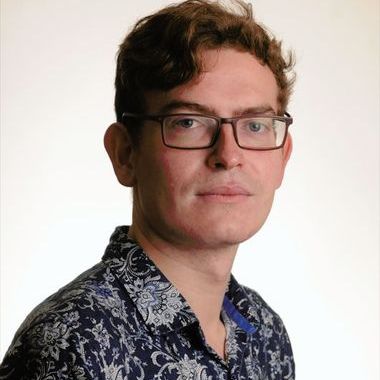
Colin is a teaching-focused lecturer in the School of Biological Sciences at Queen's University Belfast, specialising in molecular genetics. While his biological research focuses on the genetics of ageing using Drosophila as a model, his educational work focuses on facilitating authentic learning and assessment within the Biosciences, both in and out of the classroom, and utilising technology to assist in this. You can find more of his activities/interests on his pure page: https://pure.qub.ac.uk/en/persons/colin-mcclure

Jordon is a PhD researcher at Imperial College London, researching how interactions influence life science students' professional identity and career trajectory. He started his career in agriculture following his readings of Animal Behaviour and Welfare at Harper Adams University, where he became a British Poultry scholar. Working within the livestock sector, he developed his passion for teaching by wanting to support the sector, which gave him his start. Continuing to ensure that he has ties to the land-based sector, Jordon is an active beekeeper when not researching or teaching. Capitalising on this passion for the land-based sector, he still maintains an active role in teaching by working alongside organisations like the Brilliant Club whilst ensuring that he maintains his focus on his research, which was motivated by the barriers he saw for his college students and now wanting to find solutions to help students in the higher education sector. He continues looking at different ways to develop his research and teaching skills and how he can enhance representation in the science community, something he has been working on as a member of the SEB OED working group and nomination task force.

University of Bristol, School of Biological Sciences
Sheila Amici-Dargan is a Professor in Life Sciences Education in the School of Biological Sciences at the University of Bristol. She is also the outreach, education, and diversity (OED) trustee for the Society of Experimental Biology. Her scientific research career started with a PhD in Biophysics at the University of East Anglia, followed by postdoctoral research positions in Neuroscience at the University of California Irvine and MRC Centre for Synaptic Plasticity in Bristol. Sheila then chose to swap to a teaching focused pathway in higher education, working for 10 years at Cardiff University’s School of Biosciences before taking up her current post at the University of Bristol in 2020 where she teaches animal physiology and neuroethology. She is also currently seconded 1 day a week, as a senior academic developer in the University of Bristol’s Curriculum Enhancement Project team leading university wide student partnership projects to enhance feedback and student agency.