
February 2026 TPJ Editor choice: How to host rhizobia: the role of EXPANSIN1 during rhizobial colonization in Lotus
Highlighting https://doi.org/10.1111/tpj.70639
Nitrogen fixation occurs within nodules formed by rhizobia in the roots. The infection can proceed via two distinct pathways: intracellularly and intercellularly. In the intracellular pathway, rhizobia attach to elongating root hairs, induce a change in the direction of root hair growth, and become entrapped within a curled root hair, forming an infection chamber. From this chamber, infection threads – tubular structures formed by invaginations of the plant cell wall and plasma membrane - facilitate the guided entry of rhizobia into root tissues, particularly the root cortex where cell divisions give rise to the nodule. This process leads to the formation of nodule primordia, which subsequently develop into mature nodules. Within these nodules, a low-oxygen environment is maintained, enabling the activity of the nitrogenase complex responsible for reducing atmospheric nitrogen to ammonia. In contrast, approximately 25% of legume species undergo intercellular infection, in which rhizobia enter the root through epidermal cracks or fissures and subsequently spread via intercellular spaces before initiating nodule formation.
Cell wall-related enzymes play an important role in rhizobial infection because cell wall remodelling is crucial for the infection process. Expansins, cell wall-loosening enzymes, participate in soybean–rhizobial interactions. Building on this knowledge, Montiel and colleagues analysed the function of expansins in Lotus rhizobial infection.
Based on protein phylogeny and expression profiling, the authors narrowed down expansin candidates to three genes that are induced during root nodule symbiosis or expressed in root hairs, where intracellular infection occurs. One of these genes, induced by both M. loti and IRBG74, encodes an α-expansin (EXPA) isoform, EXPA1. Single-cell RNA-seq analysis of lotus roots showed that EXPA1 was predominantly upregulated in cortical cells after rhizobial inoculation. Transcriptional reporter lines displayed promoter activity in the root apex and emerging lateral root primordia, and, following inoculation, in deformed root hairs and surrounding epidermal cells prior to the initiation of rhizobial infection.
Protein localization studies showed that EXPA1 accumulated in the cell wall surrounding the infection chamber, but was less abundant in the infection thread, and was also present in the cell walls of dividing cortical cells during nodule primordium formation. Notably, EXPA1 was expressed during both intracellular and intercellular invasion of Lotus roots.
Functional analysis of expa1 mutants demonstrated a role for EXPA1 in root growth and development. The mutants exhibited delayed nodule primordium formation, reduced nodule number, and nodules that were smaller and paler, indicating compromised rhizobial colonization and nitrogen fixation.
Interestingly, both intra- and intercellular rhizobial colonization were similarly affected in the expa1 mutants. In contrast, mutants of cell wall-remodelling enzymes like nodulation pectate lyase (NPL) exhibit a stronger inhibition of nodule formation after inoculation with IRBG74 (intercellular infection) compared to the phenotype observed with M. loti (intracellular infection). The authors speculate that intercellular infection relies more heavily on NPL1-mediated cleavage of pectin monomers than does intracellular colonization via root hair infection threads. Conversely, EXPA1-mediated cell wall loosening appears to be equally critical for both intra- and intercellular rhizobial entry.
Infection remains the least understood stage in the formation of nitrogen-fixing root nodules. Identifying the molecular components involved and understanding their functions are critical steps toward developing strategies to enhance nitrogen fixation in legumes and to promote beneficial microbial associations in other crops. For example, it may lead to the identification of novel biomarkers that facilitate or predict successful microbial colonization. It is also a step towards engineering rhizobial symbiosis in non-legume crops. Modern agriculture relies heavily on synthetic nitrogen fertilizers, whose production is extremely energy-intensive. Therefore, enabling crops to fix atmospheric nitrogen would contribute significantly to more sustainable agricultural systems.
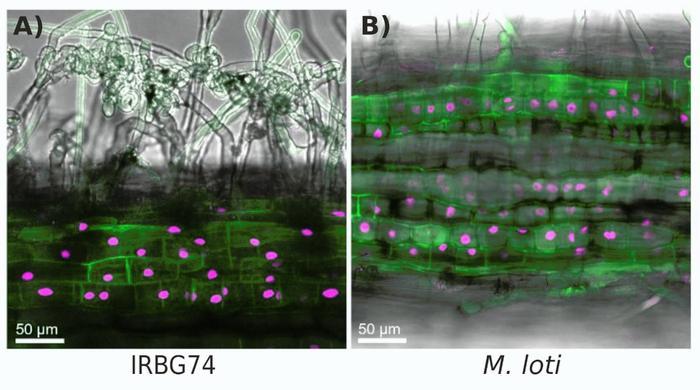
Figure 1: Lotus japonicus α-expansin EXPANSIN1 is expressed in dividing cortical cells during nodule primordia formation.
Both intercellular infection by the rhizobium IRBG74 (A) as well as intracellular infection by Mesorhizobium loti (M. loti) (B) induced localisation of EXPA1-YFP (green) at the cell wall of cortical cells. Cells containing the transgene are marked by expression of nuclear-localised DsRed (magenta).
Figure modified from (Montiel et al., 2025).