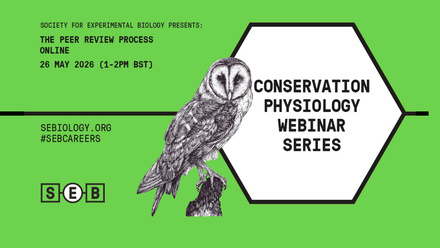
One week left to register for for the upcoming Community Conversations webinar: Writing and Responding to Peer Review
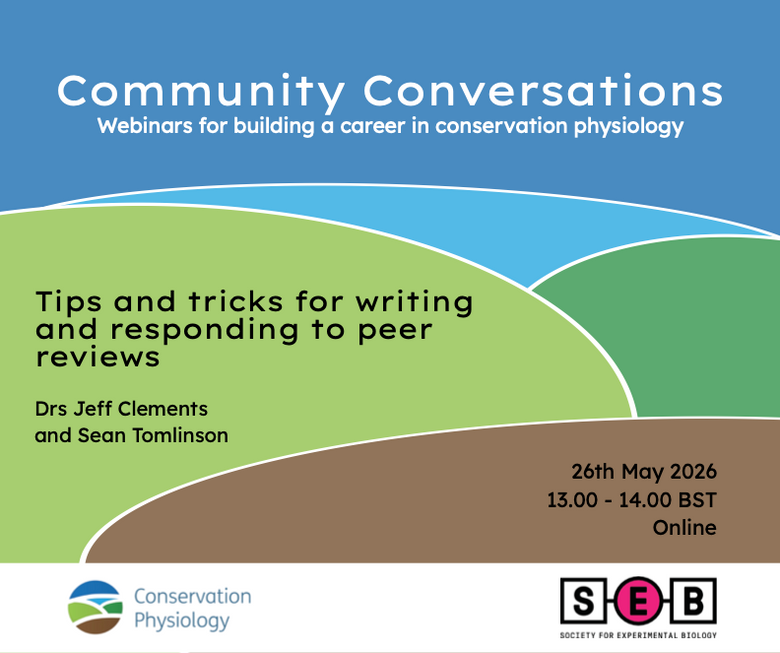
There is only one week left to register for the third installment of Conservation Physiology’s Community Conversations series, aimed at early career researchers wishing to build a career in conservation physiology or other fields of research.
Peer review is vital to journal publishing and research, yet there is a lack of formal training in how to write constructive peer reviews, and in how authors can respond to peer reviews effectively.
This webinar is designed for early career researchers looking to build confidence and experience in academic publishing. Led by Conservation Physiology journal editors Dr Jeff Clements and Dr Sean Tomlinson, the webinar will provide practical advice on constructive and collegiate peer reviewing, from the point of view of both authors and peer reviewers. For more details of what to expect, see this editorial published in Conservation Physiology journal.
Once you register, you will be sent the Zoom link and joining details 1 day before the event.
There is an opportunity on the booking form to let us know if you have any accessibility requirements so we can help everyone to engage and access this webinar.
*You will need to create and/or log into your SEB account to be able to book this event.
Join the Conservation Physiology special interest group!
Already a member of SEB? If you're interested in this webinar, you should join the Conservation Physiology special interest group (SIG)!
The field of conservation physiology explores the physiological responses of organisms to anthropogenic -induced environmental change and attempts to determine the possible threats imposed by current and future conditions. This group brings together physiologists, ecologists and conservation biologists together that have an interest in studies that are assessing and predicting the impacts of current and future human-induced environmental change on organisms.
Code of Conduct
By attending this event, you are agreeing to abide by the SEB code of conduct. SEB does our best to maintain an inclusive and welcoming environment for everyone, but you can report unwanted behaviour using our anti-harassment report form if you feel this has not been the case.
If you have any questions, please contact [email protected]
We are looking forward to see you there,
The SEB team