June 2026 TPJ Editor choice: Friendly fungi: Volatile compounds released during plant-fungal interaction stimulate plant growth
Research highlight for Fang et al. (2026). Plant growth promotion mediated by volatile organic compounds during the Gongronella butleri–plant interaction
Friendly fungi: Volatile compounds released during plant-fungal interaction stimulate plant growth
Plants and fungi share a complex history developed over millions of years of co-existence. While some fungi are pathogenic to plants, others form symbiotic relationships that benefit plant growth. Mucoromycotina are a subphylum of root-associated fungi that were among the earliest to establish a mutualistic relationship with ancient plants. Remarkably, some species of Mucoromycotina can impact plant growth even without direct physical contact. This effect relies on volatile organic compounds (VOCs) – small, lipophilic metabolites released into the atmosphere that can trigger physiological changes in nearby plants. Researchers Zemin Fang and Xiaojie Wang at Anhui University in China anticipate that VOCs could be exploited to reduce the reliance on synthetic chemical fertilisers to bolster agricultural yields.
In their recent study, Zemin and Xiaojie’s groups established a non-contact co-cultivation system, where plants and fungi are grown in physically separated adjacent compartments with a shared headspace for VOC diffusion. Growth of tomato plants alongside the Mucoromycotina fungus Gongronella butleri w5 (w5) under these conditions yielded seedlings with significantly enhanced growth across multiple physiological traits, including lateral root formation and fresh weight. Solid-phase microextraction gas chromatography (SPME-GC) analysis identified four VOCs present only when tomato plants were cultured with w5: 4-methylbenzyl alcohol (4-MB), trans-2-dodecanol (2-DO), 3-pyridinecarboxaldehyde (3-PCA) and 1H-indole-4-carboxaldehyde (4-IC). These compounds were chemically synthesized and applied to tomato to assess their individual contribution to plant growth promotion. Application of 4-MB, 2-DO and 4-IC at a 100 nM concentration significantly promoted growth of tomato plants across several metrics. Interestingly, combined treatment with all three compounds led to a reduction in tissue fresh weight, however a combination of 4-MB+4-IC only significantly promoted plant growth.
To investigate the molecular mechanisms underlying plant growth promotion by 4-MB and 4-IC, the authors switched to the model plant Arabidopsis thaliana. Like tomato, Arabidopsis growth improves under non-contact co-cultivation with w5 (Figure 1). Following treatment with 4-MB, the ethylene precursor SAM (S-adenosyl-L-methionine) and genes related to ethylene biosynthesis were strongly induced, while genes encoding enzymes responsible for jasmonic acid biosynthesis were upregulated by 4-IC. Notably, the combined 4-MB+4-IC treatment uniquely induced production of the cytokinin trans-zeatin alongside the activation of genes in its biosynthetic pathway. The ability of w5 to promote lateral root growth in Arabidopsis was significantly diminished in mutant plants unable to perceive jasmonic acid (coi1), ethylene (etr1) and trans-zeatin (cre1), highlighting the role of these phytohormones as crucial mediators of plant growth promotion by G. butleri-dependent VOCs.
This study identified novel VOCs released during the interaction of G. butleri with tomato. Two of these compounds, 4-MB and 4-IC, stimulate the growth of diverse plant species including the Solanaceous crop tomato and the model Brassicaceae plant Arabidopsis. For Zemin and Xiaojie, many fascinating questions about plant-fungal interactions remain to be explored. Certain VOCs are produced only when both fungi and plants are present, indicating that the repertoire of VOCs arises as a dynamic response driven by inter-kingdom signalling. In the future, the researchers hope to further elucidate this intriguing airborne chemical language, and to discover the origin and perception mechanism of plant growth-promoting VOCs.
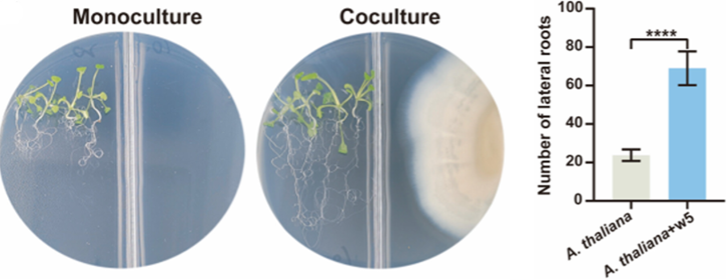
Figure 1. Gongronella butleri w5 promotes lateral root formation in Arabidopsis.
Non-contact co-cultivation with G. butleri w5 promotes growth of Arabidopsis seedlings (left), including a significant increase in lateral root formation (right).