Animal
A1 - We’re Just Another Animal: Sharing Ideas, Techniques And Approaches Between Fields Of Human And Animal Study
Session Organisers

Prof Lewis Halsey

Prof Shaun Killen
Invited Speaker
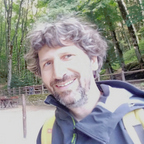
Dr Andrea Perna
Session Description
In evolutionary terms, Homo sapiens are just one terminal branch on a tree of life that has a crown of millions. Because we ourselves are humans, however, research into this one species has a special focus - many scientists who study the human condition never research other species. On the flip side, many animal biologists never study humans, seeing them as a special case and somehow fundamentally different to all other organisms. Siloing humans versus other animals within scientific disciplines impedes the dissemination of ideas, theories and methods. This session seeks to break down some of those barriers between human and animal biologists.
A2 - Physiological And Behavioural Consequences Of Human Wild-Life Interactions
Session Organisers
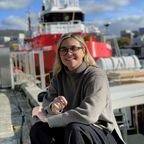
Dr Harriet Goodrich
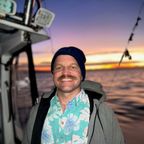
Dr Barrett Wolfe
Invited Speaker
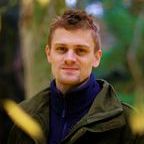
Dr Dominic Cram
Session Description
Wildlife encounters with humans are as diverse as they are consequential. Recreational fishing, hunting, beekeeping, ecotourism, and urban expansion all create opportunities for direct and indirect interactions that can reshape animal behaviour and physiology. These effects may be harmful, neutral, or even beneficial, and their influence can extend from individuals to populations and ecosystems, altering resilience, ecological interactions, and evolutionary pathways. This session welcomes studies from any terrestrial, aerial or aquatic system that reveal how human activity shapes behaviour or physiology, and encourages contributions that explain how these changes arise and their significance for ecology, evolution, or conservation.
A3 - Mitochondrial Plasticity: Adaptive Or Constrained Responses To Stress?
Session Organisers

Dr Jules Devaux

Dr Alice Harford
Invited Speakers

Mariacristina Filice

Adèle Léger
Session Description
Aerobic life relies on mitochondria. Any physiological stress resulting from either extreme performance or external stressors, applies pressure on cellular homeostasis and subsequently, the mitochondrial workload. This organelle orchestrates many aspects of cellular homeostasis, including energy production, ion balance, redox state, signaling and apoptosis. From thermal extremes to oxygen limitation, and from developmental cues to social stress, animal mitochondria orchestrate resilience across scales: cellular, organismal, and evolutionary. This session will explore how animal mitochondria integrate stress signals and shape adaptive outcomes, linking energy metabolism, physiology and ecology.
Proudly sponsored by

A4 - Ionic, Osmotic And Metabolic Homeostasis In Insects And Other Invertebrates
Session Organisers

Dr Jean-Paul Paluzzi

Prof. Kenneth Halberg
Invited Speakers

Dr Martina Gáliková

Dr Naoki Okamoto
Session Description
This session will bring together various global experts working primarily on insects but also other invertebrate organisms. The focus of this session covers homeostatic processes governing ionic, osmotic and metabolic homeostasis involving dynamic mechanisms utilized by animals to adapt, cope and rectify changing circumstances and conditions in their internal environments. As several pioneering senior researchers have retired in recent years, we envision this symposium as a catalyst for renewal helping to empower both established scientists and, in particular, the next generation of group leaders to reimagine and redefine the field to ensure the future for invertebrate physiology. The session features several invited speakers and a series of talks and posters chosen from submitted abstracts. We encourage submissions that incorporate homeostatic mechanisms from a wide diversity of invertebrate organisms.
A6 - Integrative Physiology of Respiratory Gas Transport and Exchange
Session Organiser

Dr. Michael Berenbrink
Invited Speakers

Prof. Angela Fago

Prof Thomas Hankeln
Session Description
Aerobic metabolism, or the fire of Life that most efficiently generates the ATP required to support the vast range of animal activity, relies on the exchange of oxygen and carbon dioxide at the organs of respiration and metabolically active tissues, and the transport of these gases between them. The physiology of respiratory gas transport and exchange is thus at the core of Animal Physiology and many of its sub disciplines and interest groups in the SEB Animal Section, namely the Animal Respiration, Ecophysiology, Osmoregulation, Conservation Physiology, and Thermobiology Interest Groups.
This session will cover mechanistic aspects of respiratory gas transport and exchange across different animal groups and biological scales—from molecular to whole organism to ecosystem levels. A second focus is on examples of environmental and evolutionary integration of respiratory gas transport and exchange.
For example, SEB conferences in the past have heavily featured studies on metabolic rates across animal groups under different conditions. This session aims to integrate mechanistic respiratory physiology with whole-organism biology and environmental constraints, helping to unify (where possible) insights across multiple and disparate studies.
The session features two invited speakers and a series of talks and posters chosen from submitted abstracts. We especially welcome submissions that clearly incorporate the spirit of the session theme.
 A7 - The Battle of Sexes: Comparative Biology of Females and Males
Session Organisers

Dr Diana Madeira
Dr Piero Calosi
Invited Speaker

Dr Elena Gissi
Session Description
Sex-based differences are a fundamental feature across the animal kingdom, manifesting across multiple levels of biological organization. Beyond morphological, anatomical, and hormonal variation, females and males often differ in life-history strategies, behaviour, and physiology. These differences may be genetically determined or arise from distinct developmental constraints. Recent experimental advances have established sex-specific biology as a central axis shaping responses to environmental change and evolutionary potential.
This session will bring together researchers across taxa and disciplines to explore the mechanisms and consequences of sex-specific biology, including gonochoric, hermaphroditic, and androdioecious systems. Contributions will emphasise integrative approaches and examine how sex-specific responses influence adaptation and limits to persistence in a rapidly changing world.
The overarching objectives are to:
- Identify mechanisms underlying sex-specific physiology and behaviour, spanning hormonal regulation, metabolic trade-offs, developmental pathways, and stress responses.
- Bridge scales of biological organisation, linking molecular and cellular processes to organismal traits, population dynamics, and ecosystem-level consequences.
- Highlight overlooked dimensions of variation by demonstrating how sex-specific traits shape tolerance, plasticity, and adaptive potential under environmental change.
- Foster interdisciplinary dialogue and collaboration, promoting cross-cutting methodologies and cutting-edge conceptual frameworks in comparative biology.
- Publish a special issue.
A8 - Seasonality and Stress Resilience: Responses to Environmental Challenges During Global Change
Session Organisers

Dr Valeria Marasco
Prof Leonida Fusani
Invited Speakers
Prof Tyler Stevenson
Dr Stefania Casagrande
Session Description
Seasonal adaptations evolved to match life cycles with predictable conditions, yet climate change now exposes organisms to suddenly mismatched environments. Understanding phenotypic adjustments to stressors offers insight into resilience from individuals to ecosystems. This session unites researchers in ecophysiology, ecotoxicology, neuroendocrinology and evolutionary biology to examine seasonal timing, plasticity, and carry-over effects in aquatic and terrestrial vertebrates. We invite contributions on climate-related stressors such as heat waves, pollutants, pathogens, and altered food resources. We particularly welcome studies linking functional mechanisms and resilience factors, including parental care and early-life environments, to fitness outcomes under global change.
A9 - Integrating Genomics and Ecology to Study Adaptation to Global Change
Session Organisers

Dr Daniel Sadler

Dr Melissa Pespeni
Invited Speakers
Dr Ann-Marie Waldvogel

Dr Rebekah Oomen
Session Description
This session will explore the integration of genomics and ecology to understand and forecast population-level responses to climate change as well as the need to experimentally validate such models. Emphasis will be placed on cutting-edge approaches, including landscape and seascape genomics, that link spatial and temporal environmental variability to genomic architecture. The session will highlight recent advances in tools such as genomic offset modelling and eco-genomic forecasting, which are increasingly being used to predict population vulnerability under future climate scenarios. By combining high-throughput genomic data with ecological models, researchers are now better equipped to assess the evolutionary potential of natural populations and inform conservation strategies. Moreover, there will be a focus on using experimentally derived fitness data to validate genomic offset models using known frameworks, which are currently lacking, particularly in the marine realm. There will be an emphasis on advancing these approaches and determining which experimentally derived fitness components are most relevant. Talks will showcase examples across taxa and ecosystems, from keystone species to those of conservation concern, emphasizing real-world applications of these methods. Our goal is to foster cross-disciplinary dialogue and inspire collaboration.
A10 - European XROMM Network: Advancing X-ray Motion Analysis Through Collaborative Community
Session Organisers

Ariel Camp
Kristen Crandell
Dr Rachel Tran

Dr Kelsey Stilson
Session Description
This workshop brings together European research groups utilising 3D x-ray motion analysis (XROMM) to share techniques and support. We will introduce a European XROMM Network (EXrN), and talks will highlight the amazing XROMM advances and challenges in the European community. The session will conclude with an open discussion of feedback from the research community. Speakers will highlight the broad diversity of research driven by XROMM, novel techniques being developed, and the ‘hidden side’ of the science: troubleshooting techniques and the lessons learned. This unique format allows early-career researchers to share in-progress research and encourages collaboration and knowledge exchange around XROMM.
 A11 - Crossing Boundaries, Crossing Distances: Physiology of Species Undergoing Range Shifts and Invasions
Session Organisers

Dr Sara Carolina Gusmão Coito Madeira
Dr Kathleen MacGregor
Invited Speaker
Dr Carolyn Tepolt
Session Description
This session examines the physiological mechanisms that enable animal species to shift their ranges or become invasive under global change. By integrating experimental, molecular, and organismal physiology with ecological and biogeographical perspectives, we explore how tolerance limits, phenotypic plasticity, and trait architectures shape species’ capacity to cross thermal and geographical boundaries. The session explicitly aligns with the Society for Experimental Biology’s mission by placing comparative experimental biology at the core of understanding biodiversity responses to environmental
change. We highlight how climate variability, extreme events, and increasing environmental heterogeneity favour adaptable, stress-tolerant organisms, promoting processes such as tropicalization, range expansion, and biological invasions across marine, freshwater, and terrestrial animal systems. Contributions will address how molecular and cellular responses scale up to whole-organism performance, population persistence, and community reassembly, and how shared physiological pathways underpin species establishment and spread in novel environments. Bringing together cutting-edge work in animal physiology, molecular ecology, phenotyping, and modelling, this session aims to bridge experimental biology and large-scale biodiversity
redistribution science. By fostering cross-taxonomic and cross-system comparisons, the session will provide mechanistic insight essential for predicting ecological reorganization and informing conservation and management strategies in the Anthropocene.
 A12 - Digital Resilience: Immortalising Biodiversity Through 3D Anatomical Models
Session Organiser

Dr Alice Leavey
Invited Speaker

Dr Jaimi Gray
Session Description
This symposium explores how ever-advancing technologies are transforming the way experimental biologists preserve, access, and analyse anatomical data. The focus is on the creation of 3D “digital twins” of biological collections, highlighting how these high-quality resources not only safeguard irreplaceable natural history materials, but also enable new experimental approaches to comparative morphology, biomechanics, evolutionary biology, engineering, robotics, education and public outreach. Early career researchers at the forefront of digital anatomy will show how 3D models are designed, generated, and applied, demonstrating their transformative potential as tools for testing hypotheses, generating reproducible datasets, and driving methodological innovation across biological disciplines.
 A13 - Adaptive Responses of Endotherms to Short-Term Weather Events and Rapid Environmental Changes
Session Organisers
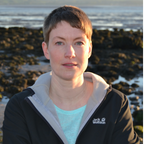
Invited Speakers

Dr Anusha Shankar

Mari Aas Fjelldal
Session Description
This session aims to collate the latest findings on how adaptive responses enable endotherms to cope with rapid environmental fluctuations. We will address the urgent need to understand how endothermic species cope with the increasing frequency and severity of extreme weather events and rapid environmental changes. Examining the adaptive capacity of species is critical to understand their resilience and vulnerability, providing key insights for biodiversity conservation, ecosystem management, and climate adaptation strategies. We encourage submissions from field research examining thermal, behavioural, or evolutionary responses to extreme weather events and/or rapid habitat changes.
This session is sponsored by , StarOdd , Journal of Thermal Biology, and Sable Systems


A14 - Anthropogenic Effects on Sensory Systems: Implications for Conservation Physiology
Session Organisers
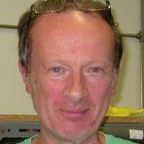
Peter Hubbard

Dr. Cosima Porteus
Invited Speakers

Raquel Vasconcelos

Dr Michael Jonz
Session Description
It has become increasingly apparent that anthropogenic activity interferes with many aspects of animal physiology at sub-lethal levels, difficult to observe directly in the wild, and that the results of this interference are often difficult to predict. This session will focus on such effects on all sensory systems, including vision, olfaction and audition. We hope to attract submissions from those working on all types of anthropogenic input into the natural environment, including chemical, sound and light, and the diverse ways such inputs can affect the normal functioning of sensory systems, and the consequent changes in behaviour and/or physiology.
Sponsored by


A15 - Cross-Kingdom Stress & Resilience – From Plants to Animals and Cells
Session Organisers
Professor Cappello Francesco
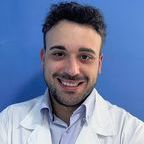
Stefano Burgio

Giuseppe Mannino
Adelaide Carista
Sara Cruciani
Invited Speakers
Prof. Massimo Emilio Maffei

Prof. Valeria Maselli
Session Description
This session provides a broad overview of how biological systems respond to stress and adapt to changing conditions. It brings together researchers working across different organisms and experimental models to discuss general concepts of stress, adaptation, and resilience. The session aims to foster cross-disciplinary exchange, encourage comparative thinking, and create links between molecular, cellular, and organismal perspectives. By offering an inclusive and accessible framework, the session supports dialogue across diverse areas of experimental biology and highlights the relevance of stress research to environmental change, health, and sustainability.
A16 - Open Biomechanics
Session Organiser
Dr. Pauline Provini
Session Description
Biologists are concerned with life, and engineers study technology. Biomechanics is where both meet, as it is the study of the technology of living things - as biomechanists, we study the mechanical principles and function of biological systems, at any organisational level - including the molecular, cellular, meso- and organismal scale - and across all kingdoms - plants, animals, fungi, bacteria and what have you. This breadth is reflected in our name: we are open to and excited about contributions from colleagues that stem from a wide range of disciplines, including zoologists, botanists, molecular biologists, physiologists, kinesiologists, mathematicians, engineers, biomimeticists, computer scientists, chemists and much more.
At the SEB Annual Conference, we host Biomechanics presentations in podium and poster sessions, which cover a broad range of general biomechanical topics, including animal locomotion, feeding, functional morphology, muscle-tendon mechanics, biological materials, evolutionary biomechanics, biorobotics, etc. We also run special sessions, contributed and organised by members of our vibrant, broad and inclusive community. We are friendly, and we are welcoming - come and join us!
Session Aims & Objectives
Our sessions are open to anyone interested in biomechanics and/or functional morphology at any scale and in any kingdom - be it molecular, cellular or organismal, and in plants, bacteria, animals or whatever else. We welcome speakers from all scientific and engineering fields, and particularly encourage presentations from post-graduate students, post-doctoral researchers and other early career scientists.
A17: Open Animal
Session Organiser

Dr. Jack Thomson
Session Description
The Open Animal Biology session covers the whole breadth of animal biology. If your talk or poster doesn’t fit into the specific Animal Biology sessions, then it will certainly have a home here. As much as possible, presentations will be organised together with similar subject groups/themes, each set of talks acting like its own small session. This is therefore an interesting and important part of the scientific programme, with high-quality presentations from across the animal biological spectrum.
Session Aims & Objectives
The session is open to all areas of animal biology research and to speakers at all levels of experience. We particularly encourage presentations by postgraduate students and early career scientists.
P7 - siRNAs and Long Noncoding RNAs in Plant and Animal Development
Session Organisers
Rainer Melzer

Dr Zixia Huang
Session Description
This session will focus on the role of noncoding RNAs in developmental processes. We will consider a broad variety of plant and animal models and put a special focus on siRNAs and long noncoding RNAs, two molecule types that are only beginning to emerge as important players in developmental biology.
The Session information is still subject to change.